
Reverse Tuck End (RTE) Carton

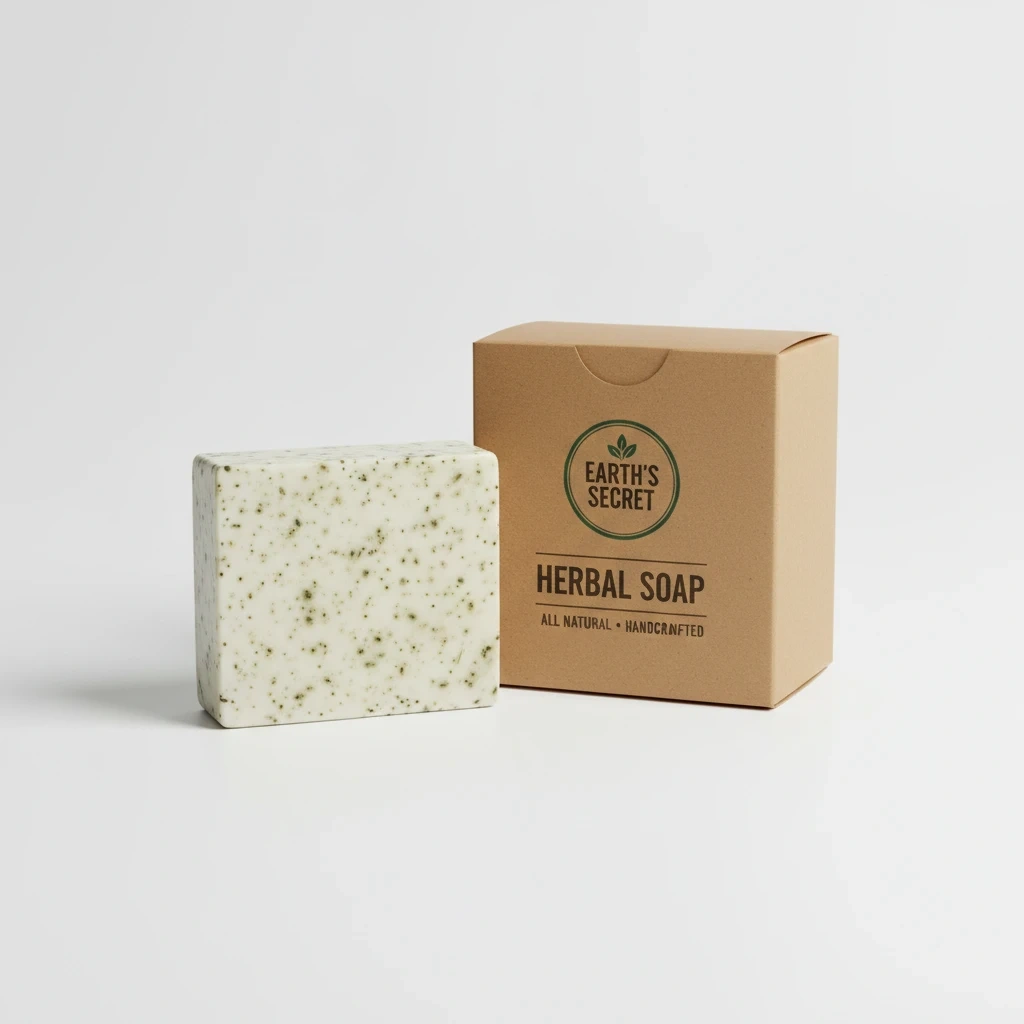

The Balanced Folding Carton — Stronger Closure Than STI, Without the Complexity of Auto-Lock
The Reverse Tuck End carton sits in the middle of the structural spectrum — and that is precisely where many D2C skincare, Ayurvedic, and wellness brands actually belong. Not every product needs an auto-lock base. Not every product is light enough for a standard straight tuck. RTE is the structure engineered for the space in between.
With top and bottom flaps closing in opposite directions, RTE delivers improved closure stability over same-direction tuck systems — without adding manufacturing complexity or cost. It is efficient to assemble, clean in retail presentation, and structurally appropriate for the majority of mid-weight FMCG formats.
At Anaika, we use a load-based evaluation to confirm whether RTE is the right call for your product — or whether STI or ALB would serve you better.
What Is a Reverse Tuck End Carton?
Understanding what makes RTE structurally different from STI helps you choose the right structure — and avoid an unnecessary upgrade to ALB.
Structural Property | Reverse Tuck End (RTE) Specification |
|---|---|
Category | Secondary Folding Carton |
Top Closure | Tuck flap closes from front to back |
Bottom Closure | Tuck flap closes from back to front — opposite direction to top |
Glue Configuration | Single side seam |
Supply Format | Flat-packed for efficient storage and logistics |
Assembly | Manual fold and tuck — bottom first, then top after product insertion |
The defining structural feature: top and bottom tuck flaps close in opposite directions. This reverse orientation creates a balanced fold pattern that distributes closure stress more evenly than same-direction (STI) systems — improving hold under moderate load without any additional gluing or manufacturing complexity.
Where RTE Sits in the Structural Spectrum
Choosing the wrong structure — either under-specifying or over-specifying — adds cost, risk, or both. RTE is positioned deliberately between the two most common alternatives:
Structure | Best Load Range | Bottom Mechanism | Best For |
|---|---|---|---|
STI (Straight Tuck) | Up to 200g – 250g | Same-direction friction tuck | Lightweight retail formats; low courier stress |
RTE (Reverse Tuck End) | 150g – 300g (ideal 150g – 250g) | Opposite-direction friction tuck — improved closure balance | Mid-weight FMCG; retail and light courier |
ALB (Auto-Lock Bottom) | 250g and above | Pre-glued crash-lock base | Heavier products, glass formats, and pan-India courier |
RTE is not a premium upgrade from STI — it is a different structural solution for a different load and format profile. The right choice depends on your product’s filled weight, height, and distribution model.
When Does STI Stop Being Sufficient?
Most brands start with STI. For many products, it performs well. But there is a predictable set of conditions where STI’s same-direction closure begins to introduce risk — and RTE resolves it without the cost jump to ALB:
- Bottom flap tension weakens as product weight approaches 200g — the same-direction tuck relies entirely on friction, which degrades under repeated handling
- Slightly taller containers introduce leverage stress that a same-direction tuck is not designed to resist — the reverse fold in RTE distributes this more effectively
- Mid-volume retail distribution with occasional courier exposure creates variable handling conditions — RTE holds more consistently across both
- Products in the 150g to 250g range, where STI feels borderline — RTE provides the structural margin without unnecessary cost escalation
Load Logic — When to Specify RTE
1. Weight Threshold Evaluation
Packed Product Weight | Structural Suitability | Recommendation |
|---|---|---|
Under 150g | Fully suitable | STI is also appropriate — evaluate on the distribution model |
150g – 250g | Ideal range for RTE | RTE recommended — balanced closure for mid-weight formats |
250g – 300g | Conditional | Evaluate the height-to-base ratio and distribution model before confirming |
300g and above | Not recommended | Consider Auto-Lock Bottom (ALB) for reliable base performance |
2. Height-to-Base Ratio
- Height-to-base ratio is under approximately 4:1 — taller formats increase flap tension beyond RTE’s reliable operating range
- The product is not top-heavy — the centre of gravity should be at mid-height or below for stable closure performance
- Bottom flap depth is sufficient to create adequate friction lock — this is confirmed during die-line specification
3. Distribution Model Assessment
Distribution Type | Structural Stress Profile | RTE Suitability |
|---|---|---|
Retail Shelf | Static load; moderate stacking | Highly Suitable |
Distributor Transit | Vibration; moderate handling cycles | Suitable |
D2C Courier — Light | Low drop frequency; controlled weight | Conditional — weight and height dependent |
D2C Courier — Heavy / Pan-India | High drop frequency and compression cycles | Not Recommended — ALB preferred |
Export Stacking | High sustained compression; extended transit | Conditional — evaluate stacking load |
4. Bottom Load Mechanics
- Friction tuck resistance — the primary closure mechanism; degrades if the board is underspecified or the die-cut tolerance is too loose
- Board stiffness — directly determines how firmly the tuck flap holds under downward load; lower GSM boards flex and release under pressure
- Die-cut tolerance — flap panels must be cut to precise dimensions; sloppy die-cutting creates loose closures that fail under moderate stress
- Crease quality — sharp, accurate creases are essential for consistent assembly and reliable flap lock under load
5. Master Carton Stacking Behaviour
- Avoid directing vertical stack load directly over the bottom tuck seam — orient cartons so side walls bear the compression
- Alternate row orientation within the master carton, where possible — this distributes the load more evenly across the carton population
- Evaluate compression load carefully beyond 4-layer stacking — sustained vertical compression can degrade friction tuck closure over warehouse dwell time
Best Suited For — Applications by Category
RTE is the right structure for mid-weight primary containers in retail and light courier environments. Here are the formats we regularly engineer for:
Skincare & Cosmetics
- 50ml to 100ml serum, face oil, and treatment bottles
- Standard moisturiser and cream jars — 30g to 100g
- Toner and mist bottles in plastic formats
- Eye cream and spot treatment formats in compact secondary cartons
Ayurvedic & Wellness Products
- 100ml to 200ml herbal oil and tonic bottles
- Standard capsule and tablet bottles — 30 to 90 count formats
- Herbal powder jars and churna formats in light to mid-weight containers
- Wellness supplement formats in PET or HDPE bottles
Attar & Fragrance — Mid-Weight Formats
- 20ml to 50ml glass attar and perfume bottles within height-to-base ratio limits
- Compact roll-on formats with moderate fill weight
- Travel and sample size fragrance sets
General FMCG — Retail and Light Distribution
- Any product in the 150g to 250g range distributed primarily through retail channels
- Mid-volume production runs where manual assembly is viable
- New product launches requiring a cost-efficient structural upgrade from STI
Packing Efficiency — What to Expect on the Line
Standard Packing Sequence
- Step 1 — Fold and tuck the bottom flap (rear direction)
- Step 2 — Verify lock — confirm tuck is fully seated before product insertion
- Step 3 — Insert product into open carton
- Step 4 — Close and tuck the top flap (front direction)
Assembly Variable | RTE | STI | ALB |
|---|---|---|---|
Base assembly method | Manual fold and tuck — reverse direction | Manual fold and tuck — same direction | Single push-open — factory pre-glued |
Time per unit at base | 3 to 5 seconds | 3 to 5 seconds | 1 to 2 seconds |
Assembly consistency | Operator-dependent | Operator-dependent | Factory-consistent |
Suitable volume range | Small to mid-scale runs | Small to mid-scale runs | Mid to high-volume runs |
Relative unit cost | Moderate — slightly above STI | Lower | Higher — pre-gluing adds cost |
For batch sizes above 5,000 units with heavier products, the efficiency gap between RTE and ALB becomes commercially significant. We will flag this during structural evaluation if relevant to your volumes.
Board & GSM Selection for RTE Cartons
Packed Product Weight | Recommended Board | GSM Range |
|---|---|---|
Under 150g | Duplex Board or SBS | 250 – 300 GSM |
150g – 250g | SBS or FBB | 300 – 350 GSM |
Near 300g (conditional) | SBS | 350 GSM — evaluate case by case |
Board grade directly impacts flap holding strength. A lower-grade duplex board at 350 GSM may perform worse than a quality SBS at 300 GSM — because stiffness, not weight alone, determines closure integrity. We specify board grade and GSM together.
Surface Finish Options
- Matte lamination — preferred by premium skincare and Ayurvedic brands for a refined, tactile surface
- Gloss lamination — high visual impact; suited for bold D2C brand aesthetics
- Soft-touch lamination — elevated tactile experience for premium and gifting formats
- Foil stamping — gold, silver, and custom foil for premium brand positioning
- Spot UV — selective high-gloss coating on logos, patterns, or product names
- Embossing and debossing — dimensional surface texture for luxury brand differentiation
Master Carton Consideration — The System Matters
- Units per master carton and internal arrangement — fit tolerance and padding requirements
- 3-ply vs. 5-ply corrugated selection based on total stack weight and stacking height
- Carton orientation within the master carton — directing vertical load to side walls rather than tuck seams
- Warehouse dwell time and stacking layers — 4-layer vs. 6-layer compression profiles are meaningfully different for friction-tuck closures
- Distribution distance and handling cycles — local retail replenishment vs. pan-India distributor transit have very different vibration profiles
Frequently Asked Questions
What is the difference between RTE and STI?
When should I choose RTE over ALB?
Is RTE suitable for courier shipping?
What GSM should I use for a 200g skincare product in RTE?
Can I switch from STI to RTE on an existing SKU?
Do you offer sampling before bulk production?
Why Work With Anaika — Structural Clarity Before Production
- Load-based GSM recommendation — board weight and grade are specified to your product’s filled weight and stacking conditions, not to a default range
- Height and leverage assessment — tall or slender container formats are evaluated for flap stress before carton dimensions are confirmed
- Die-cut tolerance specification — RTE closure performance depends on precise flap dimensions; we specify tolerances, not just nominal die-line dimensions
- Crease quality control — sharp, accurate creases are non-negotiable for consistent friction-tuck performance; this is part of our manufacturing brief
- Controlled die-line sharing — die-lines are issued with structural context and tied to confirmed product dimensions
- Structured artwork validation — artwork is reviewed against print-safe zones and structural fold lines before plate-making
- Sampling before bulk — structural mockups and printed samples are standard for all new SKUs
- Single-point accountability — from structural brief to delivery
Not Sure Whether RTE, STI, or ALB Is Right for Your Product?
- Product filled weight (grams)
- Container dimensions — height, width, depth
- Container material — glass, PET, HDPE, or other
- Distribution model — retail, D2C courier, export, or mixed
- Current structure, if any, and any existing damage or closure issues
- Units per master carton (if known)