
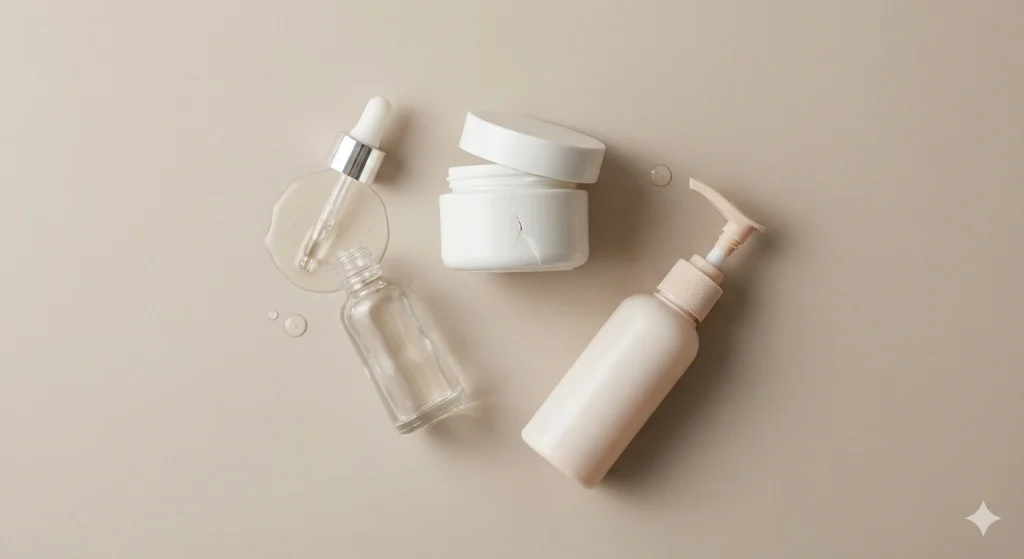
Packaging Mistakes That Increase Returns in Skincare & Personal Care Brands
Product returns hurt more than just your bottom line. Every return represents a disappointed customer, wasted shipping costs, damaged inventory you can’t resell, and hours spent processing refunds. For skincare brands operating on tight margins, a return rate above 3-5% can mean the difference between profitability and constantly struggling with cash flow.
What makes this particularly frustrating is that many returns aren’t caused by your actual product. Your formulation works well. Customers like the results. But somewhere between your facility and their doorstep, something went wrong with the packaging. The pump doesn’t work. The bottle leaked. The jar cracked in transit.
These aren’t random accidents. They’re predictable outcomes of specific packaging decisions that seemed fine during small batch testing but reveal themselves as problems only after you’ve shipped hundreds of units. This guide walks through the most common packaging mistakes that drive returns in skincare brands and how to fix them before they cost you more customers.
Why Packaging Failures Are Particularly Damaging
When a customer returns a product because it leaked all over their package, or the pump stopped working after three uses, or the jar arrived cracked, that’s a packaging failure. The customer never got to experience your actual product properly. They’re left with a mess, frustration, and a strong inclination to leave a negative review.
The financial impact compounds quickly. You’ve paid for raw materials, manufacturing, packaging, outbound shipping, payment processing, and potentially marketing costs to acquire that customer. When the product comes back due to packaging failure, you recover almost nothing. The returned product is usually unsellable. You refund the customer fully. You often cover return shipping. And you’ve lost the customer’s trust.
Packaging-related returns are entirely preventable. Unlike formulation preferences, which vary by individual, packaging either works or it doesn’t. A loose seal will leak for everyone. An undersized box will lead to breakage across shipments.
Mistake 1: Closures That Don’t Match Product Viscosity
The most common return trigger is leakage, and leakage most often happens because the closure doesn’t match what’s inside the bottle.
Disc top caps work well for thick lotions and creams. But put a thin serum or lightweight facial oil in a bottle with a disc top, and you’ll see leakage during shipping. The product is thin enough to seep past the closure seal when packages get tipped or shaken in courier vehicles.
Pump dispensers have the opposite problem. They work beautifully for serums and light lotions. But choose pumps for thick creams because pumps feel premium, and you get a pump that either doesn’t dispense at all or requires so much pressure that product shoots out uncontrollably. Customers assume the pump is defective and return the product.
The fix: Match closure type to product behaviour. Thin products need pumps with proper dip tubes or screw caps with seal liners. Medium-viscosity products work with disc tops. Thick products need jars, squeeze tubes, or specially designed thick-product pumps. Test by filling containers, sealing them, and laying them on their side for 48 hours before shipping to customers.
Mistake 2: Skipping Liner Seals to Save Costs
Liner seals provide tamper evidence and create a secondary seal that prevents leakage during shipping. Many founders skip them to save ₹2-4 per unit. This decision often costs ten times that amount in returns.
Without a liner seal, products can leak slowly during transit, especially with temperature fluctuations that cause expansion and contraction. The primary closure alone isn’t always sufficient for liquid or low-viscosity products.
Even when using liner seals, choosing the wrong type creates problems. Pressure-sensitive seals need clean, dry bottle rims to adhere properly. If there’s product residue on the rim during filling—especially common with oily products—the seal won’t bond completely and will peel away during shipping.
The fix: Select liner seals appropriate to your product and container material. Ensure your filling process includes cleaning bottle rims before capping. Test sealed containers by storing them in various positions for at least a week before shipping.
Mistake 3: Inadequate Protection for Shipping
Your primary container might be perfect, but if it arrives damaged because the outer packaging didn’t protect it adequately, you’ll still face returns. This becomes critical when scaling from local delivery to national courier networks, where packages face multiple handlers, sorting machinery, and varying temperatures.
The most frequent mistake is using packaging barely adequate for the product. A glass bottle in a thin box with minimal cushioning might survive local delivery but faces higher breakage rates when shipped across states. Each transfer point increases the chance of impact.
Box sizing matters more than founders realize. An oversized box allows products to shift during transit, creating impact points. A too-tight box provides no cushioning space and transfers external impacts directly to the product.
Temperature protection is often overlooked until summer arrives. Products containing butters or waxes can arrive melted after sitting in courier vehicles that reach 45-50°C during Indian summers.
The fix: Stress-test your packaging before scaling. Order products to yourself at different addresses using standard couriers during different seasons. Ship to tier-two cities where handling is rougher. Adjust box size and cushioning based on actual shipping conditions, not ideal scenarios.
Mistake 4: Pump Mechanisms That Fail After Initial Use
Some returns happen after customers use the product a few times and realize the dispenser doesn’t work properly. This often results from a mismatch between pump specification and product formulation.
Fine mist sprayers work well with thin, water-like products, but clog quickly with products containing oils or suspended particles. Customers spray their facial mist a few times, then the nozzle clogs and stops producing a fine mist.
Lotion pumps with dip tubes too short leave the last 10-15% of product inaccessible. Customers feel they didn’t get the full amount they paid for and request returns.
Airless pumps look premium but are prone to failure if not specified correctly. Using an airless pump designed for thin serums with a thick cream results in pump failure. The customer can’t get the product out and triggers a return.
The fix: Work with packaging suppliers who understand your formulation. Provide actual product samples for testing, not just viscosity specs. Test 10-20 units yourself by using them daily for two weeks before shipping to customers.
Mistake 5: Over-Filling or Under-Filling Containers
Fill volume affects returns in opposite ways, and brands get caught making one mistake while avoiding the other.
Under-filling creates visible disappointment. When customers receive a container that looks half-empty, they feel shortchanged and request refunds, even if the correct weight is there.
Over-filling seems safer but creates leakage problems. Temperature changes during shipping cause expansion. Without headspace, the product has nowhere to go except out through the closure. This leads to leaked residue in packages, especially during the summer.
Pumps and foaming products need specific headspace for proper function. Over-filling interferes with mechanisms, leading to products that don’t dispense properly.
The fix: Establish clear fill protocols with tolerance ranges for each product type. For most liquids and creams, filling to 90-95% capacity provides adequate product volume while allowing necessary headspace. Document target fill weights and train your team to work within specified tolerances.
Mistake 6: Poor Label Adhesion
Labels that peel, smudge, or fall off during shipping make customers question product quality and authenticity.
Water-based products used in bathrooms need waterproof labels. Standard paper labels will bubble or peel within days of bathroom use. Customers receiving products with degraded labels often assume the product is old or counterfeit.
Temperature extremes during shipping can exceed standard adhesive performance ranges. Labels may loosen in 45-50°C courier vehicles during summer or fail in cold conditions during winter shipments to northern India.
The fix: For bathroom products, use synthetic face stocks like polypropylene with waterproof adhesive. Test labeled containers by spraying water on them and exposing them to hot and cold environments before shipping to customers.
Mistake 7: Ignoring Product Settling and Separation
Some formulations naturally settle or separate, especially natural products. While not defective, this triggers returns when customers don’t expect it or when packaging makes remixing impossible.
Suspensions with particles settle to the bottom during shipping. In opaque bottles or pump dispensers, customers can’t see settling and don’t know to shake before use. They dispense clear liquid and assume the product is defective.
Natural oils that solidify in cold temperatures confuse customers who think the product is broken, even though it returns to liquid at room temperature.
Products in airless pumps can’t be shaken effectively. If ingredients settle, dispensing becomes inconsistent, concerning customers.
The fix: If your product settles or separates, clearly communicate this on labels with “Shake well before use” instructions. Choose packaging that makes shaking practical—bottles with disc tops or screw caps instead of pumps. For products that solidify in cold weather, include information about this characteristic on labels.
How to Systematically Reduce Returns
Addressing packaging problems requires a methodical approach that catches issues before they reach customers.
Implement sample testing: Before full production, create 20-30 units with the actual product in final packaging. Use half for stress testing: drop them, shake them, store them at temperature extremes. Use the other half to simulate customer experience: use the product daily for two weeks.
Build quality control checkpoints: Check samples from each production batch for proper fill levels, closure tightness, liner seal adhesion, and label application quality. Catching problems during production is far cheaper than discovering them after shipping.
Track return reasons systematically: Distinguish between leakage, breakage, dispensing problems, and quality perception issues. This data tells you which packaging elements need attention.
Work with experienced suppliers: Build relationships with packaging suppliers who understand skincare requirements and can provide technical guidance on material selection and compatibility testing.
When to Upgrade Packaging
Not every packaging improvement is worth the cost. Make rational decisions about where to invest.
If packaging-related returns exceed 5% of shipments, you have a problem requiring immediate attention. The cost of returns far exceeds the cost of better packaging.
If returns are below 2% and packaging issues are minimal, your current packaging is probably adequate. Minor improvements might not justify the cost.
Between 2-5% represents a judgment call. Calculate the actual cost of returns, including product loss, shipping, refunds, and lost customer lifetime value. Compare this to packaging upgrade costs and decide based on numbers.
Conclusion
Most packaging-related returns are predictable and preventable. They happen because of specific design mismatches, material incompatibilities, or process inconsistencies that reveal themselves at scale.
The path to reducing returns isn’t necessarily spending more on packaging. It’s about matching packaging specifications to your product characteristics, shipping conditions, and use scenarios. A ₹45 container with the right closure and proper liner seal prevents more returns than a ₹80 container that looks premium but has functional mismatches.
Start by tracking return reasons systematically. Test packaging under real conditions before scaling. Build quality control into your process. Work with suppliers who understand your specific needs.
Remember that packaging decisions compound over time. Every shipment that arrives intact builds customer trust and increases repeat purchases. Every return erodes that trust and often loses that customer permanently. The investment in getting packaging right pays returns far beyond the immediate reduction in return rates.