
Combo Folding Cartons — 2-Pack, 4-Pack & 6-Pack Structural Systems

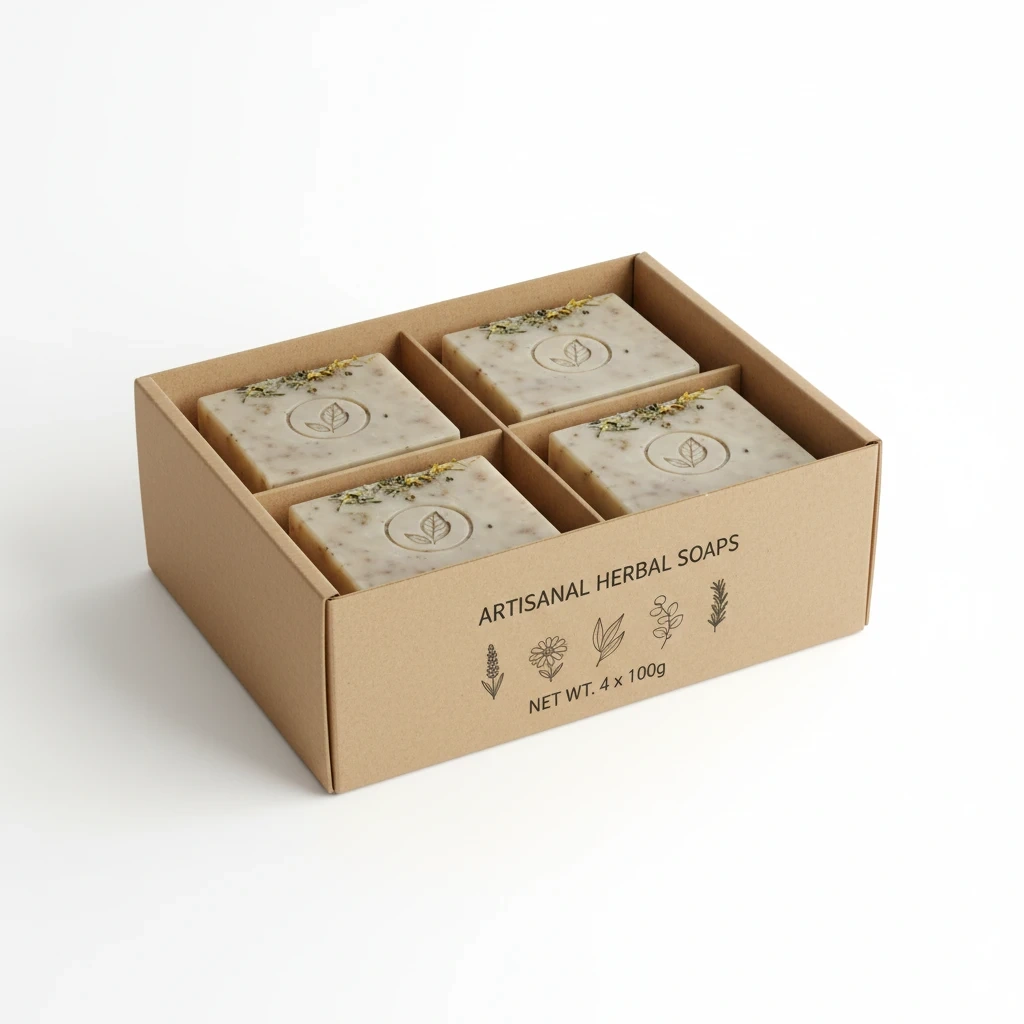
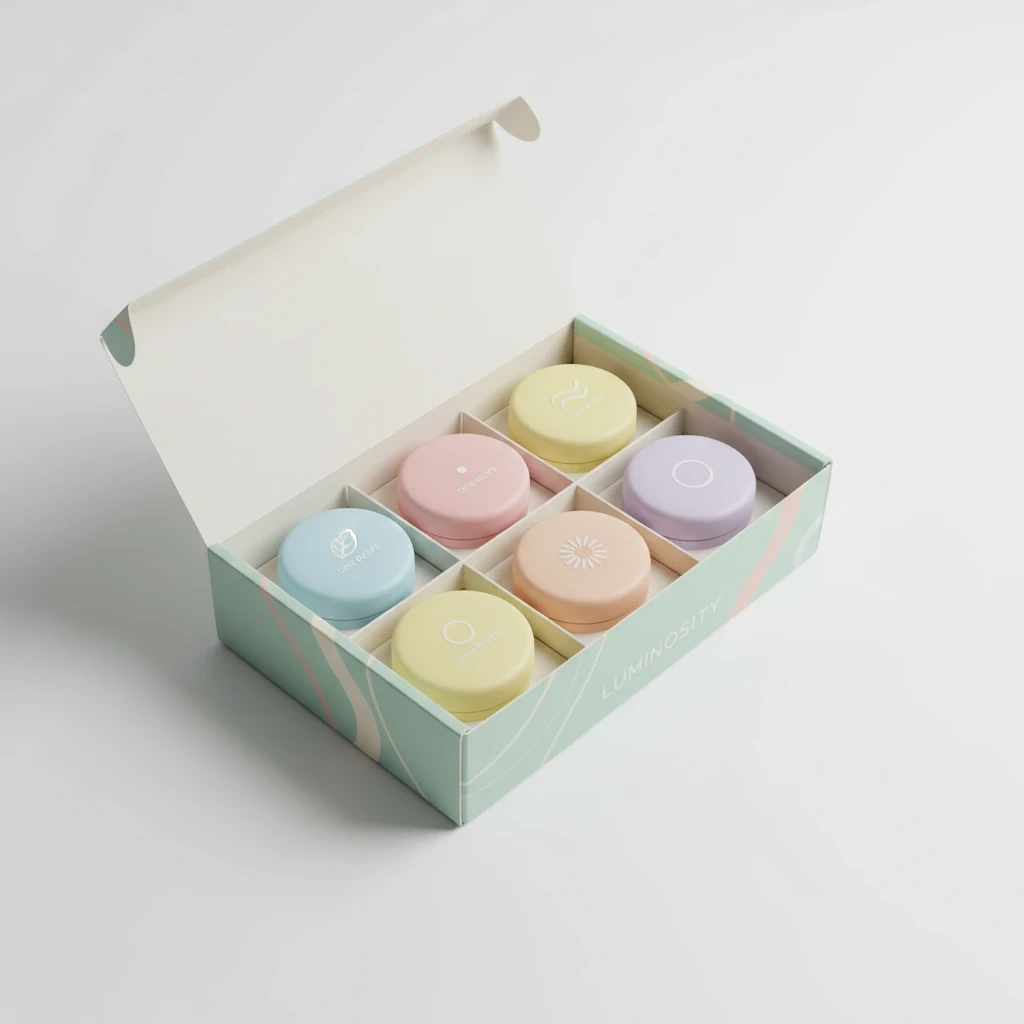
Multi-Unit Bundle Packaging Engineered for D2C Skincare, Ayurvedic, Attar, and Wellness Brands. A combo carton is not a larger mono carton. It is a different structural problem entirely.
When you group two, four, or six primary units into a single secondary carton, the load logic changes. Weight is distributed unevenly. Internal movement becomes a damage risk. Base stress multiplies. And the master carton stacking pressure compounds everything.
D2C brands building bundle SKUs — twin serums, skincare regimens, attar sets, wellness kits — need combo cartons that are engineered for the load, not assembled from default mono carton thinking. At Anaika, every combo carton starts with a structural evaluation: pack configuration, total weight, container type, and distribution model before a single dimension is confirmed.
Why Combo Cartons Are Not Just Bigger Mono Cartons
This is the most common misunderstanding in multi-unit packaging. Brands scale up a mono carton dimension to fit two or four units — and encounter failures that a single-unit carton never produced. Here is why:
Variable | Single-Unit Mono Carton | Combo Multi-Unit Carton |
|---|---|---|
Load distribution | Single central load — relatively predictable | Multiple units — weight shifts laterally and dynamically in transit |
Internal movement | Product fills carton — minimal internal play | Multiple units can shift, collide, and create impact stress on carton walls |
Base stress | Single-point vertical load | Distributed but uneven — corner and edge loading increases significantly |
Panel bowing risk | Low for correctly specified GSM | Higher — wide panels under distributed load bow outward without a correct board grade |
Master carton load | Single carton compression profile | Heavier combined weight multiplies stacking compression on lower layers |
Partition requirement | Rarely needed | Often required — especially for glass containers or fragile formats |
The structural evaluation for a combo carton covers all six variables above — not just the outer dimensions.
Structural Classification
Structural Property | Combo Folding Carton Specification |
|---|---|
Category | Secondary Multi-Unit Folding Carton |
Purpose | Grouped primary unit packaging — 2, 4, or 6 unit configurations |
Closure Type — Light Combo | RTE or Reinforced STI — for lower total packed weights |
Closure Type — Heavy Combo | Auto-Lock Bottom (ALB) — required for total weights above 400g |
Internal Configuration | Open bay, cross partition, U-insert, or die-cut separator — determined by container type and movement risk |
Supply Format | Flat-packed — pre-scored for efficient storage and logistics |
Architecture by Pack Configuration
2-Pack Configuration
2-Pack Design Variable | Detail |
|---|---|
Layout Options | Side-by-side (width alignment) or front-back (depth alignment) |
Suited For | Twin serums, shampoo and conditioner sets, oil and dropper combos, paired skincare formats |
Primary Structural Risk | Uneven weight shift — if units are not identical in weight, centre of gravity shifts laterally under transit vibration |
Secondary Risk | Internal collision between units during courier drops — particularly damaging for glass containers |
Base Closure | RTE or Reinforced STI for combined weight under 400g; ALB preferred above 400g |
Recommended GSM | 300 – 350 GSM for light unit formats |
Partition Requirement | Recommended for glass or mismatched-weight units; optional for identical plastic units |
4-Pack Configuration
4-Pack Design Variable | Detail |
|---|---|
Layout Options | 2×2 grid (preferred for compact units) or linear 4-unit alignment (for slim formats) |
Suited For | Skincare regimen sets, multi-product wellness kits, attar mini-set collections, capsule bottle 4-packs |
Primary Structural Risk | Increased bottom load — four units concentrate significantly more downward force on the base panel than a mono carton |
Secondary Risk | Panel bowing — wide carton panels under distributed load require higher board stiffness to resist outward flex |
Tertiary Risk | Internal unit collision in 2×2 grid — diagonal movement during courier drops creates corner-to-corner impact |
Base Closure | Auto-Lock Bottom preferred across most 4-pack formats; RTE only for very light unit combinations |
Recommended GSM | 350 – 400 GSM across most 4-pack configurations |
Partition Requirement | Cross-partition or die-cut separator strongly recommended — mandatory for glass containers |
6-Pack Configuration
6-Pack Design Variable | Detail |
|---|---|
Layout Options | 3×2 grid (standard for compact or medium units); linear 6-unit alignment (rare — for very slim formats only) |
Suited For | Full skincare regimen sets, Ayurvedic daily kit packaging, attar gift collections, wellness subscription boxes |
Primary Structural Risk | High compression load — total packed weight often exceeds 600g to 1kg+; base and sidewall load is substantial |
Secondary Risk | Bottom seam stress — friction tuck closures are not rated for 6-pack weights; ALB is mandatory |
Tertiary Risk | Transit vibration amplification — six units in a 3×2 grid create a wide, heavy structure that oscillates under courier handling |
Quaternary Risk | Master carton stacking pressure — 6-pack units in a master carton stack represent high per-layer weight |
Base Closure | Auto-Lock Bottom mandatory — no exceptions for 6-pack configurations |
Recommended GSM | 400 GSM and above; reinforced board for glass or high-density unit formats |
Partition Requirement | Full internal divider grid mandatory — individual unit bays prevent collision and maintain upright positioning |
Load Logic — How Weight Behaves Differently in Combo Cartons
- Vertically — stacking load in the master carton multiplies with every additional unit in the combo pack
- Horizontally — internal unit movement during transit creates lateral forces that the carton walls and base must absorb
- Dynamically — courier vibration, drops, and handling cycles amplify the combined weight through momentum effects
Total Packed Weight | Structure Recommendation | Notes |
|---|---|---|
Under 400g | RTE or Reinforced STI | Partition recommended if units are glass or mismatched weight |
400g – 800g | Auto-Lock Bottom (ALB) | Partition required for glass; recommended for plastic multi-unit formats |
800g – 1.2kg | Auto-Lock Bottom + Internal Partition | Full divider grid for 6-pack; cross-partition minimum for 4-pack |
Above 1.2kg | Evaluate the corrugated alternative | Folding carton may not be the appropriate structure at this weight — rigid box or corrugated tray recommended |
Weight thresholds are indicative. Container material (glass vs. plastic), height-to-base ratio, and distribution model can move the recommended structure up or down from these ranges.
Internal Control Systems — Partitions, Inserts, and Dividers
When Internal Control Is Required
- Glass containers in any multi-unit configuration — bottle-to-bottle collision under courier drops causes breakage even without carton failure
- Mismatched unit weights in a 2-pack — uneven weight distribution creates a shifting centre of gravity under vibration
- Tall units in a wide combo format — height leverage increases tipping risk when internal play is present
- 4-pack and 6-pack configurations, regardless of material — unit density and total weight make partition a structural necessity, not an optional upgrade
Internal Control Options
Control System | Structure | Best For |
|---|---|---|
Cross Partition | Interlocking die-cut board panels forming a grid of individual unit bays | 4-pack and 6-pack configurations; glass containers; fragile formats |
U-Shaped Insert | Single-folded board channel separating two units | 2-pack side-by-side configurations; identical unit formats |
Die-Cut Separator | Flat die-cut panel with slots for individual unit bases | Slim or tall units in linear alignment; light to mid-weight formats |
Window Alignment Panel | Perforated or windowed insert maintaining the unit upright position and display alignment | Retail-facing combo packs where product visibility through the carton window is required |
Best Suited For — Combo Applications by Category
Skincare & Cosmetics
- Twin serum or face oil sets — 2-pack side-by-side in 30ml to 50ml bottles
- Day and night skincare regimen packs — 2-pack or 4-pack with matched container formats
- Full routine kits — cleanser, toner, serum, moisturiser in 4-pack or 6-pack configuration
- Gifting and festive sets — premium combo formats with soft-touch lamination and foil finish
Ayurvedic & Wellness Brands
- Herbal oil combo packs — 2-pack or 4-pack for daily and weekly use formats
- Supplement bundle SKUs — capsule and tablet bottle combinations in 4-pack grid format
- Wellness starter kits — mixed format combos including oils, powders, and tinctures
- Subscription box inserts — structured combo cartons as subscription fulfilment outer packaging
Attar & Fragrance
- Attar discovery sets — 4-pack or 6-pack mini-bottle configurations with full divider grid
- Perfume gift sets — 2-pack premium format with foil stamping and magnetic or tuck closure
- Travel fragrance kits — compact combo formats for 10ml to 20ml glass vial collections
General D2C — Bundle and Gift Formats
- Festival and gifting season bundle packs — typically 4-pack or 6-pack with premium surface finish
- Retail value multi-packs — 2-pack or 4-pack for retail shelf bundle pricing
- Subscription and trial kit packaging — structured combo as primary fulfilment outer
Distribution Suitability by Channel
Distribution Channel | Combo Suitability | Key Structural Requirement |
|---|---|---|
Retail Shelf | Highly Suitable — strong shelf presence and visual impact | Correct GSM for panel stiffness; clean finish for retail presentation |
Distributor Transit | Suitable — moderate handling and vibration exposure | ALB for 4-pack and above; partition for glass units |
D2C Courier (pan-India) | Suitable with ALB — not suitable with RTE or STI for weights above 400g | ALB mandatory; partition required for glass; 5-ply master carton recommended |
Export | Suitable for reinforced specification | ALB mandatory; full internal divider grid; 5-ply corrugated master carton; stacking load evaluation required |
Board & GSM Selection for Combo Cartons
Pack Configuration | Recommended GSM | Board Grade | Notes |
|---|---|---|---|
2-Pack — light units (under 400g total) | 300 – 350 GSM | SBS or FBB | RTE closure acceptable; ALB preferred if courier distribution |
2-Pack — heavier units (above 400g total) | 350 GSM | SBS | ALB required; partition recommended |
4-Pack — standard formats | 350 – 400 GSM | SBS | ALB required; cross-partition strongly recommended |
4-Pack — glass or heavy formats | 400 GSM | High BF or SBS | ALB mandatory; full divider grid required |
6-Pack — all formats | 400 GSM and above | High BF Board or reinforced SBS | ALB mandatory; full divider grid mandatory; evaluate corrugated above 1.2kg total |
Surface Finish Options
- Matte lamination — preferred for premium skincare and Ayurvedic gift sets; refined tactile surface
- Gloss lamination — high visual impact for bold D2C bundle aesthetics and retail shelf presence
- Soft-touch lamination — elevated tactile experience for luxury fragrance and cosmetic gifting formats
- Foil stamping — gold, silver, and custom foil for premium brand positioning on combo gifting packs
- Spot UV — selective high-gloss on logos, patterns, or product names; effective on combo retail formats
- Embossing and debossing — dimensional texture for luxury gift set differentiation
Master Carton Consideration — Compounding Load at Scale
- Units per master carton — fewer combo units per master carton layer is often the correct answer; overcrowding amplifies base stress
- 3-ply vs. 5-ply corrugated requirement — most combo carton formats above 400g total weight require 5-ply corrugated master cartons
- Stacking layer evaluation — 4-layer vs. 6-layer stacking creates meaningfully different compression profiles for heavier combo units
- Orientation within master carton — combo carton orientation must direct vertical stack load to side walls, not to tuck seams or base flap edges
- Distribution distance and handling cycles — export and pan-India courier routes introduce extended vibration and drop profiles that mono carton master carton specs do not account for
Common Structural Mistakes in Combo Carton Specification
- Using STI or RTE for a heavy 4-pack — friction tuck bases are not rated for the combined weight of four units in courier distribution; base failure is predictable, not accidental
- No partition for glass bottles — glass-to-glass collision under courier drops causes breakage even when the outer carton is undamaged; partition is not optional for glass combo formats
- Ignoring master carton stacking compression — a correctly specified combo carton fails in the warehouse when stacked six layers high without 5-ply corrugated protection
- Over-sizing the carton to allow easy insertion — excess internal space becomes internal movement space in transit; tight tolerances protect product, loose tolerances damage it
- Choosing structure by carton cost rather than load logic — the cost difference between RTE and ALB is measurable; the cost of damaged product returns is not
- Specifying mono carton GSM for a combo format — a 300 GSM board that performs well for a 100g mono carton is under-specified for a 600g 4-pack
Structural Evaluation Framework — What We Review Before Confirming
Evaluation Step | What We Assess | Why It Matters |
|---|---|---|
1. Individual unit weight | Weight of each primary container, filled | Establishes per-unit load contribution to base and sidewall stress |
2. Total packed weight | Combined weight of all units in the combo | Primary structural driver — determines base closure type and board GSM range |
3. Height-to-base ratio | Height vs. base footprint of each unit | Tall units in wide combo formats create leverage and tipping risk under vibration |
4. Container material | Glass, PET, HDPE, or other | Glass requires a partition; glass also adds weight and breakage risk on base impact |
5. Distribution model | Retail, courier, distributor, export | Determines acceptable closure type and whether 5-ply master carton is required |
6. Master carton stacking layers | Expected stack height in the warehouse or transit | 4-layer vs. 6-layer stacking changes the compression load on the bottom combo unit significantly |
We confirm structure, closure type, GSM, and partition requirement only after completing all six evaluation steps. Not before.
Frequently Asked Questions
Can I use the same carton structure as my mono carton for a combo pack?
Do I need partitions for a 2-pack combo?
What closure type should I use for a 4-pack skincare set?
What GSM do I need for a 6-pack Ayurvedic wellness kit?
Can combo cartons be used for export?
Do you offer sampling for combo carton formats?
Why Work With Anaika — Structural Clarity Before Production
- Full load evaluation before structure confirmation — individual unit weight, total pack weight, and container material are all reviewed before we recommend closure type or GSM
- Pack configuration analysis — layout, centre of gravity, and internal movement risk are assessed for each pack size
- Partition strategy — internal control system type and board specification are confirmed as part of the structural brief, not as an afterthought
- Distribution model review — closure type and master carton specification are aligned to your actual distribution channels, not a generic default
- Master carton integration — combo carton and master carton specifications are evaluated as a system
- Controlled die-line sharing — die-lines are issued with full structural context and tied to confirmed pack dimensions
- Structural sampling before bulk — mock-ups with actual product units are standard for combo formats
- Single-point accountability — from structural brief to delivery
Building a Bundle SKU? Start With the Structural Evaluation
- Number of units in the combo — 2, 4, or 6
- Individual unit filled weight (grams) and dimensions — height, width, depth
- Container material — glass, PET, HDPE, or other
- Total packed weight (if known)
- Distribution model — retail, D2C courier, export, or mixed
- Partition requirement — known or to be evaluated
- Units per master carton (if known)