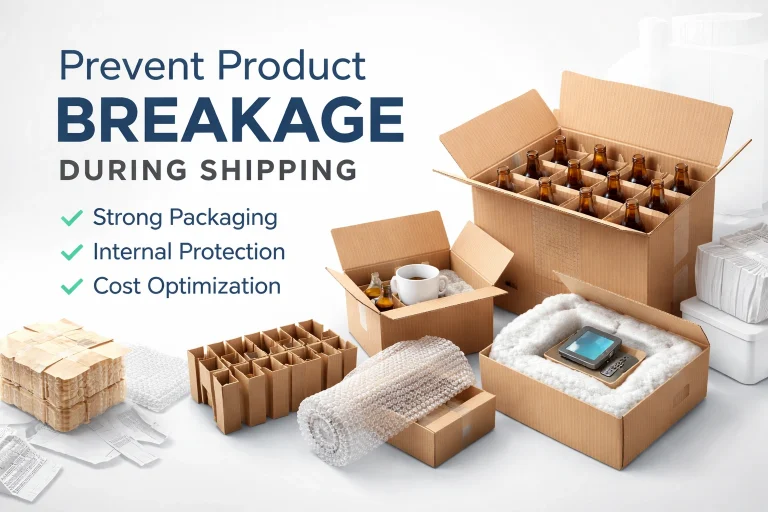
How to Prevent Product Breakage During Shipping with the Right Packaging

secure packaging for safe shipping

Product breakage during shipping is one of the most common and costly problems for growing brands.

Whether you’re shipping glass, cosmetics, electronics, or fragile items, poor packaging structure leads to damage, returns, and loss of customer trust.

In this guide, we break down how to design packaging that minimizes breakage, controls cost, and ensures safe delivery across transit conditions.

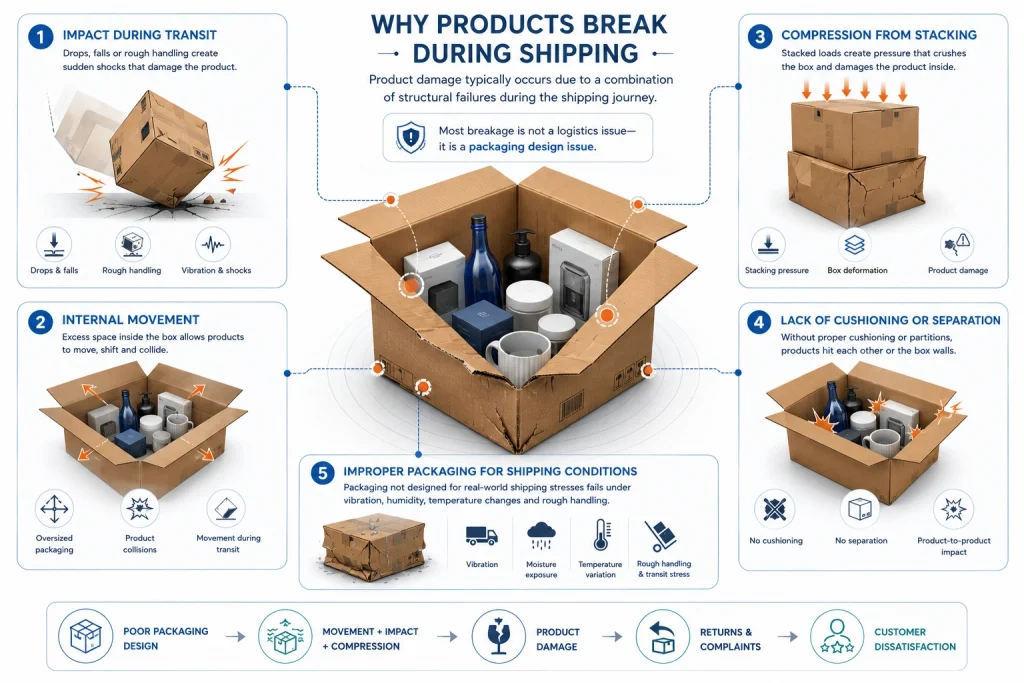
1. Why Products Break During Shipping

Product damage typically occurs due to a combination of structural failures:

  • Impact during transit (drops, rough handling)
  • Internal movement inside the box
  • Compression from stacking
  • Lack of cushioning or separation
  • Improper packaging for shipping conditions

Most breakage is not a logistics issue — it is a packaging design issue

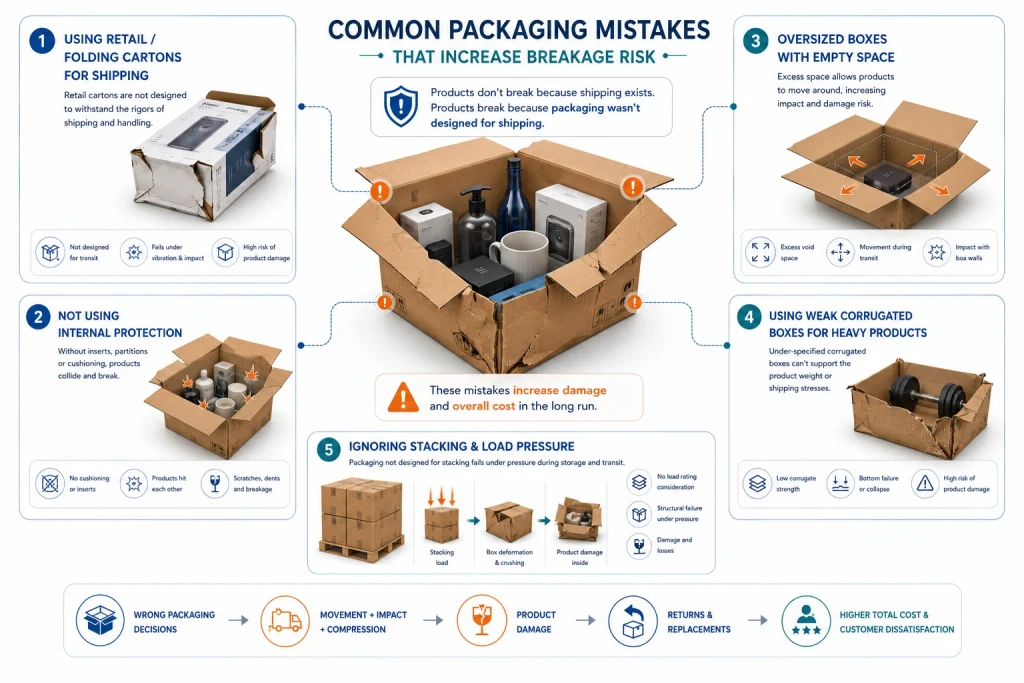
2. Common Packaging Mistakes

Many brands unknowingly increase breakage risk by:

  • Using retail/folding cartons for shipping ❌

  • Not using internal protection ❌

  • Oversized boxes with empty space ❌

  • Weak corrugated boxes for heavy products ❌

  • Ignoring stacking and load pressure ❌ 

  These mistakes increase damage and overall cost in the long run

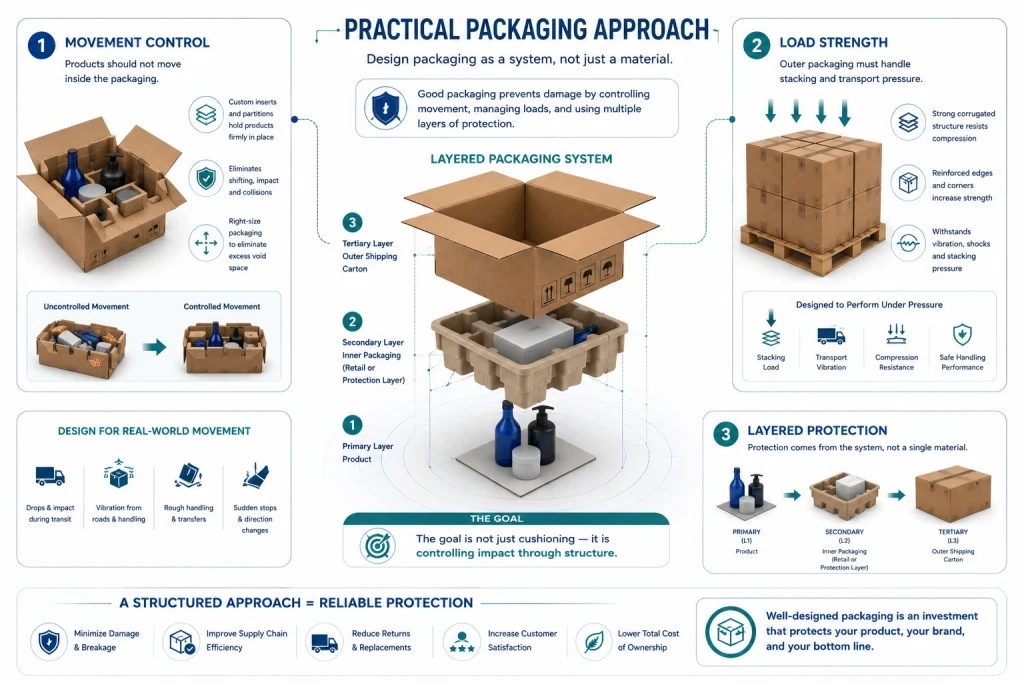
3. Practical Packaging Approach

Instead of focusing only on materials, packaging should be designed using a structured approach:

🔹Movement Control

Products should not move inside the packaging.
 

🔹Load Strength

Outer packaging must handle stacking and transport pressure

🔹Layered Protection

Packaging should function in 3 layers:

  • Primary: Product
  • Secondary: Inner packaging (retail or protection layer)
  • Tertiary: Outer shipping carton
 
The goal is not just cushioning — it is controlling impact through structure

4. Recommended Packaging Structures

Based on use-case, here are commonly used structures:

📦Master Carton (Shipping Layer)

  • 3 ply or 5 ply corrugated box
  • Selected based on product weight
  • Designed for stacking and transit

📦Inner Protection Options

  • Corrugated partitions
  • Die-cut inserts
  • EPE / foam inserts (for high-value items)
  • Corrugated wrap sheets

📦Product-Level Packaging

  • Snug-fit cartons
  • Wrap-based protection
  • Custom inserts for delicate items
Structure should be selected based on risk level + product type
 

5. Cost vs Safety Trade-off

One of the biggest challenges is balancing packaging cost and product safety:

  • Lower-cost packaging → higher risk of damage
  • Stronger packaging → higher upfront cost but lower losses

The right balance depends on:

  • product value
  • shipping distance
  • return/replacement cost

6. Final Recommendation

There is no one-size-fits-all packaging solution.

The ideal structure depends on:

  • product type (fragile / semi-fragile / durable)
  • weight and dimensions
  • shipping method (courier/bulk transport)
  • cost sensitivity

 A well-designed packaging system reduces breakage, improves efficiency, and builds customer trust

7. Frequently Asked Questions

What is the best way to prevent product breakage during shipping?

Answer:

The best way to prevent breakage is by using:

  • strong corrugated cartons (3 ply or 5 ply based on weight)
  • internal protection like partitions, inserts, or wraps
  • snug-fit packaging to eliminate movement

This ensures the product stays stable and absorbs impact during transit.

Why do products break during shipping?

Answer:
Products usually break due to:
  • impact during handling and transport
  • internal movement inside the box
  • lack of protective structure
  • weak outer packaging
Most breakage happens due to poor packaging design, not product defects.
 

What type of packaging is best for fragile items?

Answer:
Corrugated boxes with internal protection (like partitions, inserts, or cushioning materials) are ideal for fragile items, as they provide strength and impact resistance.
 

How do you protect items from damage in transit?

Answer:
To protect items during shipping:
  • eliminate empty space inside packaging
  • use layered protection (product + inner + outer packaging)

  • Choose the right box strength based on load
  • design packaging based on shipping conditions