
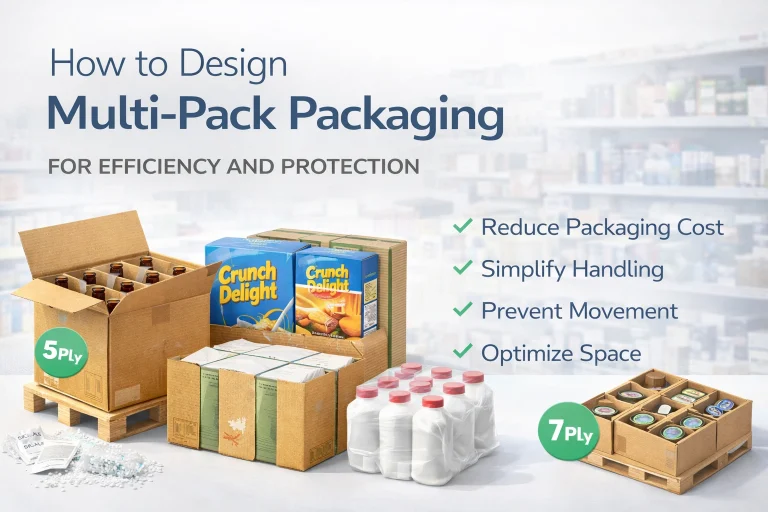

How to Design Multi-Pack Packaging for Efficiency and Protection

efficient and protective multi pack solutions

Multi-pack packaging is used when multiple products are packed together in a single unit — such as packs of 2, 3, 6, or more.

It plays a key role in improving shipping efficiency, reducing packaging cost per unit, and ensuring product safety during handling and transport.

In this guide, we break down how to design multi-pack packaging that balances protection, cost, and ease of handling.

1. Why Multi-Pack Packaging Matters

Multi-pack packaging impacts:

  • cost per unit
  • shipping efficiency
  • storage optimization
  • product safety

It is a key driver of operational efficiency

2. Common Multi-Pack Packaging Mistakes

Many businesses face issues due to poor multi-pack design:

  • No internal separation between items❌
  • Oversized cartons with movement ❌
  • Weak cartons for heavier packs ❌
  • Overloading packs beyond safe limits ❌
  • Ignoring handling convenience ❌
These mistakes lead to damage and inefficiency
 

3. Practical Packaging Approach

Multi-pack packaging should be designed with:

🔹Pack Configuration

Define how many units per pack

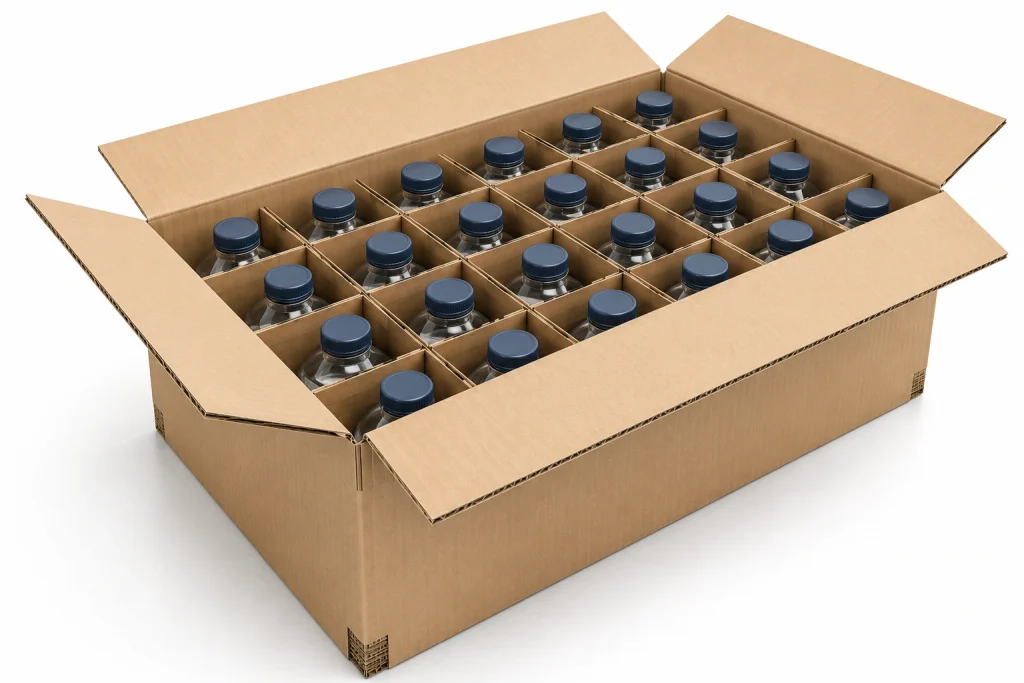
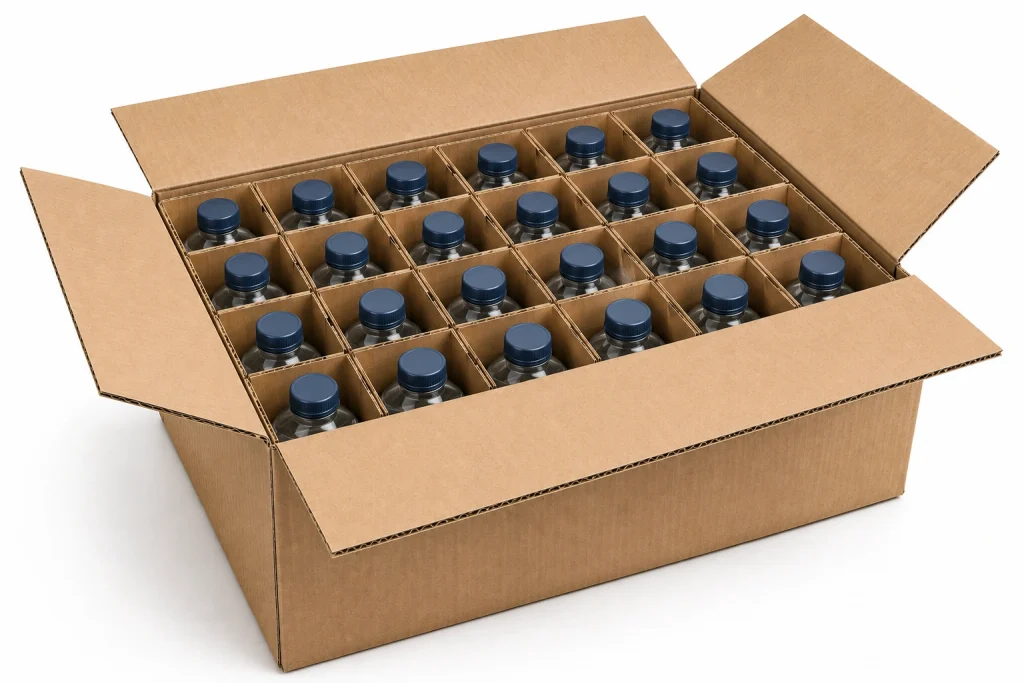
🔹Movement Control

Use partitions or inserts to secure items

🔹Load Management

Ensure carton strength matches total weight

🔹Handling Ease

Pack size should be easy to lift and transport

The goal is to combine efficiency with protection

4. Recommended Packaging Structures

Based on use-case, here are commonly used structures:

📦Corrugated Multi-Pack Cartons

  • 3 ply or 5 ply based on weight
  • designed for bundling multiple units

📦Partition-Based Packaging

  • grid partitions
  • E-flute dividers
  • prevents product collision

📦Insert-Based Packaging

  • die-cut inserts
  • custom-fit solutions

📦Wrap-Based Protection

  • corrugated wraps
  • paper or foam wraps
Structure should match product type + quantity per pack

5. Cost vs Efficiency Trade-off

Multi-pack packaging helps reduce:

  • packaging cost per unit
  • shipping cost per unit

But:

  • Larger packs increase risk if not designed properly

The right balance depends on:

  • product fragility
  • weight
  • shipping method

6. Final Recommendation

There is no standard multi-pack solution.

The ideal design depends on:

  • number of units per pack
  • product type and size
  • shipping conditions
  • cost sensitivity

A well-designed multi-pack system improves efficiency, reduces cost, and protects products

7. Frequently Asked Questions

What is multi-pack packaging?

Answer:

Multi-pack packaging refers to packaging designed to hold multiple units of a product together in a single pack for shipping, storage, or retail purposes.

What are the benefits of multi-pack packaging?

Answer:
Multi-pack packaging helps:
  • Reduce packaging cost per unit
  • Improve shipping efficiency
  • Simplify handling and storage
  • Optimize space utilization

How do you design packaging for multiple items?

Answer:
To design multi-pack packaging:
  • Use partitions or dividers
  • Ensure a tight fit to avoid movement
  • Choose the right carton strength
  • Balance pack size with handling ease

What is the best packaging for combo or bundle products?

Answer:
Corrugated cartons with internal partitions or inserts are ideal for multi-pack or combo products, as they provide structure and prevent product collision.